Categories
Victims

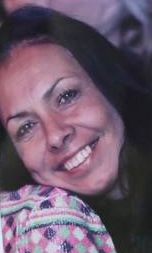
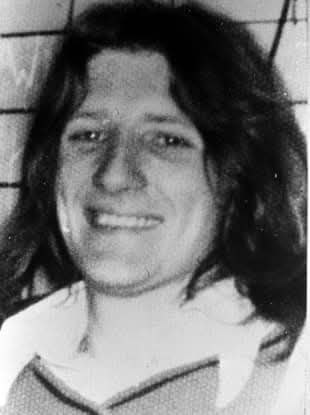
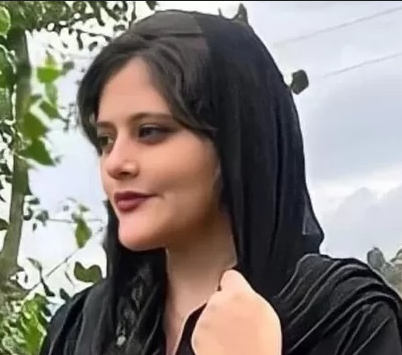
Mahsa Jîna Amini, 13.09.2022. Arrested and killed in the police station – Tehran

September 13, 2022 – Tehran
22-year-old. Arrested and beaten up during her transportation : fell into a coma before before dying 3 days later from a cerebral hemorrhage or stroke due to head injuries

Iranian government introduced a mandatory dress code for women after the Iranian Revolution of 1979. On 7 March, less than a month after the revolution, then recently named Supreme Leader Ruhollah Khomeini decreed the hijab (Islamic headscarf) to be mandatory for all women in workplaces. He further decreed that women would no longer be allowed to enter any government office without the hijab, as they would be “naked” without it.

Since then, violence and harassment against women not wearing the hijab in accordance with Iranian government standards, whether by law enforcement personnel or pro-government vigilantes, has been reported. From 1980, women could not enter government or public buildings or attend their workplaces without a hijab. In 1983, mandatory hijab in public was introduced in the penal code, stating that “women who appear in public without religious hijab will be sentenced to whipping up to 74 lashes“. In practice, however, a number of women, such as Saba Kord Afshari and Yasaman Aryani, were sentenced only to heavy prison terms.

Mahsa was born on 21 September 1999 to a Kurdish family in Saqqez, Kurdistan Province, in northwestern Iran. While Mahsa was her Persian given name, her Kurdish name was Jîna, and this was the name her family used.

For Masha, as can be seen from her photos and videos on social media, only the mandatory rules made her wear hijab half-heartedly. She did not observe the hijab in various events such as weddings and wore traditional Kurdish clothes that do not have a hijab. She also partially observed hijab when traveling to tourist areas. This issue caused the moral security officers to arrest her and beat her. This also caused people, especially women and girls, to join her and put away their hijab.

Masha had come to Tehran to visit her brother and on 13 September 2022 she was arrested by the Guidance Patrol at the entry of the Shahid Haghani Expressway in Tehran while in the company of her family. She was then transferred to the custody of Moral Security. Her brother, who was with her when she was arrested, was told she would be taken to the detention center to undergo a “briefing class” and released an hour later.

Masha was beaten by police shortly after her arrest, while in a police van. After she arrived at the police station, she began to lose vision and fainted. Two hours after her arrest, She was taken to Kasra Hospital.It took 30 minutes for the ambulance to arrive, and an hour and a half for her to get to Kasra hospital. Iranian police later denied beating Masha, claiming she had “suffered a sudden heart failure“. Police later stated to her brother that his sister had a heart attack and a brain seizure at the police station to which she had been taken.

For two days, Masha was in a coma in Kasra Hospital in Tehran. On 16 September, journalist Niloofar Hamedi (later arrested) broke the story of her coma, posting to Twitter a photo of Masha‘s father and grandmother crying and embracing in the hospital hallway. She died in the intensive care unit later that day. The clinic where she was treated released a statement on Instagram saying that she had already been brain dead when she had been admitted around 13 September. By 19 September, the post had been deleted.

On 17 September, the police chief of Tehran stated that the grounds of Masha‘s arrest were wearing her headscarf improperly and for wearing tight pants.

Published hospital pictures show Mahsa Amini bleeding from the ear and with bruises under her eyes. In an 18 September letter, Doctor Hossein Karampour (the top medical official in Hormozgan province), pointed out that such symptoms “do not match the reasons given by some authorities who declared the cause to be a heart attack… (they are instead consistent with) a head injury and the resulting bleeding.” This was also confirmed by alleged medical scans of her skull, leaked by hacktivists, showing bone fracture, hemorrhage, and brain edema.

By 19 September, police had released CCTV footage showing a woman, who they identified as Masha, talking with an official. In the footage, the official grabs her clothing, and Masha holds her head with her hands and collapses. Her father dismissed the footage as an “edited version” of events. Her brother noticed bruises on her head and legs. The women who were detained with her said she had been severely beaten for resisting the insults and curses of the arresting officers.

According to Iran International, the Iranian government was forging fake medical records for Masha, showing that she had a history of heart disease. On 20 September, Massoud Shirvani, a neurosurgeon, stated on state-owned television that she had a brain tumor that was extracted at the age of eight.

By 21 September, the hospital had released preliminary CT scans. Government supporters stated the CT scans showed psychological stress caused by a previous brain operation; critics stated the scans showed physical beating and trauma. The Iranian government stated Masha had a brain operation at the age of five.

Regarding various government claims, Mahsa‘s father Amjad Amini told the BBC around 22 September that “they are lying… She never had any medical conditions, she never had surgery.” (Two classmates, interviewed by the BBC, said that they weren’t aware of Mahsa ever being in hospital.) Amjad said he had not been allowed to view his daughter‘s autopsy report. He denied that Mahsa had been in bad health. “I asked them to show me the body-cameras of the security officers, they told me the cameras were out of battery.” Iranian authorities had charged that Mahsa was wearing immodest clothes when arrested; Amjad rejected this claim, stating that she always wore a long overcoat. Amjad said he was repeatedly prevented by medical staff from seeing his daughter‘s body after her death: “I wanted to see my daughter, but they wouldn’t let me in”, and charged that when he asked to see the autopsy report, he was told by the doctor: “I will write whatever I want and it has nothing to do with you.” Amjad saw the body after it had been wrapped for the funeral, and noticed bruises on her feet, but could not see the rest of the body due to the wrapping. Iranian authorities denied any head injuries or internal injuries.

According to Iran International, on 29 September an audio file was released by a former commander of Iran’s Revolutionary Guards Corps, which reported unnamed “reliable sources” saying that the reason for Mahsa‘s death was an injury to her skull and that the injury was the result of a severe beating.

The Amini family’s lawyer, Saleh Nikbakht, told the Etemad online news website that “respectable doctors” believe Mahsa was hit while in custody. Nikbakht also said the family wants a fact-finding committee to probe her death, and that police footage filmed after her arrest should be handed over.

By 2 October, Masha‘s family had acknowledged that she had an operation for a minor neurological condition (possibly a brain tumor) at the age of eight, but said it had been under control through levothyroxine (a medication to treat hypothyroidism), and that her doctors had recently given her the all-clear. Citing medical specialists they had consulted, the family stated the condition was unrelated to Masha‘s death.

A 7 October coroner’s report stated that her death was “not caused by blows to the head and limbs” and instead linked her death to pre-existing medical conditions, ruling that she had died from multiple organ failure caused by cerebral hypoxia. The report stated Masha had had a brain tumor operation when she was eight. The report did not say whether she had suffered any injuries.

In a 13 October letter, over 800 members of Iran’s Medical Council accused the head of Iran’s Medical Council of assisting in a government cover-up of the cause of Mahsa‘s death.

In an 8 December article, Der Spiegel confirmed with Masha‘s grandfather that she had a brain tumor removed when she was an elementary school student. Her grandfather emphasized that the tumor was benign, and stated that she never had any health problems since the operation. Der Spiegel also relayed a report from one her two cousins present at Masha‘s arrest, stating that she had been forced into the arrest vehicle by the morality police.

Physical violence
X
Arrest
 Detention / Custody
 Hustle / Projection
 Prone position / lying flat on the stomach / ventral decubitus
 Folding” (holding a person in a seated position with their head resting on their knees)
 Painful armlock
 XKicks, punches, slaps
 Feet / knees on the nape of the neck, chest or face
 Blows to the victim while under control and/or on the ground
 Blows to the ears
 Strangulation / chokehold
 Fingers forced backwards
 Spraying with water
 Dog bites
 Hair pulling
 Painful tightening of colson ties or handcuffs
 Painfully pulling by colson ties or handcuffs
 Sexual abuse
 Striking with a police vehicle
 Electric shocks
 Use of gloves
 Use of firearm
 Use of “Bean bags” (a coton sack containing tiny lead bullets)
 Use of FlashBall weapon
 Use of sound grenade
 Use of dispersal grenade
 Use of teargas grenade
 Use of rubber bullets weapon (LBD40 type)
 Use of batons
 Use of Pepper Spray
 Use of Taser gun
 Use of tranquillisers
 Execution
 Disappearance
Psychological violence
 Charge of disturbing public order
 Charge of rebellion
 Accusation of beatings to officer
 Charge of threatening officer
 Charge of insulting an officer
 Charge of disrespect
 Charge of resisting arrest
 Aggressive behaviour, disrespect, insults
 Intimidation, blackmail, threats
 Vexing or intimidating identity check
 Mock execution
 Intimidation or arrest of witnesses
 Prevented from taking photographs or from filming the scene
 Calls to end torment remained unheeded
 Prolonged uncomfortable position
XFailure to assist a person in danger
 Photographs, fingerprints, DNA
 Threat with a weapon
 Shooting in the back
 Charging without warning
 Kettling (corraling protestors to isolate them from the rest of the demonstration)
 Car chase
 Sexist remarks
 Homophobic remarks
 Racist comments
 Intervention in a private place
 Mental health issues
 Harassment
 Body search
 Home search
 Violence by fellow police officers
 Passivity of police colleagues
 Lack or refusal of the police officer to identify him or herself
 Refusal to notify someone or to telephone
 Refusal to administer a breathalyzer
 Refusal to fasten the seatbelt during transport
 Refusal to file a complaint
 Refusal to allow medical care or medication
XLies, cover-ups, disappearance of evidence
 Undress before witnesses of the opposite sex
 Bend down naked in front of witnesses
 Lack of surveillance or monitoring during detention
 Lack of signature in the Personal Effects Register during detention
 Deprivation during detention (water, food)
 Inappropriate sanitary conditions during detention (temperature, hygiene, light)
 Sleep deprivation
 Confiscation, deterioration, destruction of personal effects
 Pressure to sign documents
 Absence of a report
 Complacency of doctors
  • 16.09.2022 – Death of Masha
  • 13.09.2022 – Arrest and beating of Masha
  • Lawyer : Saleh Nikbakht
  • Collective :
  • Donations :
Categories
Victims

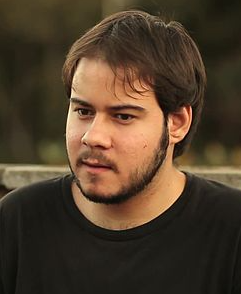
Pablo Rivadulla Duró, 16.02.2021. Arrested – Lleida

February 16, 2021 – University of Lleida
33-year-old. Arrested, convicted, jailed

Pablo Rivadulla Duró (born 9 August 1988), known artistically as Pablo Hasél, is a Catalan rapper, writer, poet, and political activist. His songs and actions, often controversial and in support of far-left politics, have led to a number of criminal charges and convictions in his country. In June 2020 he was sentenced to six months in prison for pushing and spraying washing-up liquid at a TV3 journalist and to two and a half years for kicking and threatening a witness in the trial of a policeman. He was imprisoned on 16 February 2021 on a nine-month sentence for recidivism in insulting the Spanish monarchy, insulting the Spanish army and police forces, and praising terrorism and banned groups. This has been labeled an attack on free speech by certain groups both in Spain and overseas, including Amnesty International, and led to numerous protests and riots.

In October 2011, Pablo was arrested and bailed for a song titled Democracia, su puta madre in which he praised Manuel Pérez MartínezCamarada Arenas“, the former secretary general of the PCE(r), who was sentenced to 17 years in prison for belonging to the terrorist group GRAPO. In April 2014, Pablo was given a two-year prison sentence for the lyrics of ten songs in praise of GRAPO, ETA, Al-Qaeda the Red Army Faction and Terra Lliure, and threats against leading politicians like José Bono or Patxi Lopez.

The Audiencia Nacional court suspended his entry into prison for three years in September 2019, on condition that he not reoffend, since the sentence was less than two years. Pablo violated this condition by continuing to sing and tweet. Pablo has denied that he supports Al-Qaeda or that it was listed among the groups he was charged with supporting.

In May 2014, Pablo was arrested for being part of a group of around fifteen people that attacked a stall belonging to the Lleida Identitària, linked to the far-right Platform for Catalonia (PxC) party.

In November 2014, Hasél released a song called “Menti-ros” which included several depictions of shooting, stabbing or bombing the mayor of Lleida, Àngel Ros. He was charged with making threats. In February 2017 he was convicted of disrespecting authority, after the court concluded that the song did not meet the legal definition of a threat. He was fined €530.

In June 2016, Pablo pushed, insulted and sprayed washing-up liquid at a TV3 journalist. He received six months in prison and a fine of €12,150 in June 2020. A few days after the court ruling and as a result of it, a group of unknown individuals attacked the headquarters of TV3 in Lleida. In the same month, he received a 212-year sentence and €2,500 fine for assault and obstruction of justice, namely for kicking and threatening a witness in the October 2017 trial of a policeman eventually acquitted of assaulting a minor, accusing him of providing false testimony. This sentence was confirmed in 2021, days after his imprisonment.

In a February 2018 interview, Pablo defended his support of the Catalan Republic, and developed his position on free speech: “I will not be a hypocrite, I do not defend freedom of expression in the abstract. I do not defend the freedom of expression of a pedophile or a Nazi to say that homosexuals should be killed. Precisely, I fight against that. […] I stand for freedom of expression to fight for democratic rights.” Later on, in another interview, in March 2018 Pablo said he was unable to find work due to his criminal convictions that disqualified him from the public sector for ten years, and that his last work had been grape picking in France.

In March 2018, Pablo was convicted by Spanish Special Court Audiencia Nacional in Madrid to a two-year prison sentence and a fine of €24,300 for insulting and slandering the Crown and using the King’s image (for which he was ordered to pay a fine), for insulting and slandering State institutions (for which he was also ordered to pay a fine); and for the offence of glorification of terrorism, being aggravated because it was a repeat offence, for which he was sentenced to seven months imprisonment in one song lyrics and in 64 tweets. The song was titled Juan Carlos el Bobón, which roughly translates as Juan Carlos the Clown, a wordplay on the former king’s actual name, Juan Carlos de Borbón. In the song, Pablo recounts the former king’s numerous scandals in a chronological order. Many of his 64 incriminated tweets were actually about police violence and a lack of accountability in that area. In one of those tweets used in the court case Pablo wrote that Joseba Arregi Izagirre, a 1981 accused ETA member, was tortured to death in a Madrid prison; pointing out this fact was part of the evidence used to claim he supported terrorism.] An appeals judge later reduced his jail term to nine months and one day because his social media remarks did “not pose a real risk” to anyone. This decision was ultimately upheld by the Supreme Court of Spain in May 2020; both rulings were hugely controversial rulings.

One of the judges of the Spanish Special Court Audiencia Nacional in Madrid who sentenced Pablo was Nicolás Poveda Peña, who was an active member of the fascist Falange, the political movement of dictator Franco, and ran for election on the lists of the Falange Party – Poveda was appointed judge by the fourth turn, that is, without going through the process of competing for the position.

On 28 January 2021, Pablo was ordered to voluntarily enter prison within ten days to serve the nine-month and one day sentence. The order was made public by the artist himself. On the same day the President of the European Court of Human Rights (ECHR) in Strasbourg, Róbert Ragnar Spanó, issued a warning to Spain that the Strasbourg doctrine on the rights in cases of criticism of ″public personas″ is ″clear″, quoting from two other Spanish cases where the ECHR ruled that Spanish sentences had been disproportionately harsh. Spanó explained that “public office holders, ministers, kings – because of the public nature of their functions – must accept wider ranges of criticism“.

On 6 February a thousand people gathered in the Plaza Jacinto Benavente in Madrid in solidarity with Pablo and in defence of freedom of expression and conscience with dozens of riot police vans and police armed with rifles in front of the gathering. On 12 February 2021, the day of his deadline to go to prison, Pablo released the song, Ni Felipe VI, ironically dedicating it to “the misnamed progressive [PSOE-Podemos] government which has perpetuated repression. Feeling nervous as the streets fill up for freedom of expression, they have promised to do something, trying to stop the mobilization, but only with this will we win this struggle“. The song begins with an intervention by the Spanish king Felipe VI in which he states that “without freedom of expression and information there is no democracy”. Within the first month the song had 1.5 million views on Youtube.

Pablo publicly refused this prison order, and was eventually arrested on 16 February. Pablo, alongside a group of over 50 students, had barricaded himself inside University of Lleida’s rectorate building in protest against his sentence. Pablo‘s freedom was supported by Amnesty International and a letter signed by 300 Spanish artists including Pedro Almodóvar and Javier Bardem, as well as by President of Mexico Andrés Manuel López Obrador, former Bolivian President Evo Morales and Venezuela’s president Nicolás Maduro. Pablo‘s imprisonment led to nights of protests involving thousands of people in cities including Valencia, Madrid and Barcelona. Podemos has likened Pablo‘s case to that of Valtònyc, another Spanish rapper prosecuted by the Spanish judiciary, who fled to Belgium in 2018 after a 312-year prison sentence for writing song lyrics that a court found glorified terrorism and insulted the monarchy. PEN Català published a communiqué – in collaboration with the Catalan Academy of Music, the Association of Catalan Language Writers, the Association of Periodicals in Catalan, Editors.cat, the Fira Literal, Freemuse, the Catalan Publishers’ Guild, Llegir en català, Òmnium; in defense of freedom of expression and for the release of Pablo.

On 1 March 2021, the public prosecutor’s office asked for another five years and three months in prison for Pablo, for incidents that took place on the night of 25 March 2018 in the attempted assault on the Government subdelegation in Lleida in protest against the arrest of Carles Puigdemont a few hours earlier in Germany. Pablo and 10 defendants had the intention, according to the Public Prosecutor’s Office, to disrupt the protection operation and “gain access to the building“, a symbol of the central government in Lleida. The State Attorney’s Office is involved in the case to claim compensation for the material damage, while the Generalitat de Catalunya brought no action against Pablo.

On 22 March 2021 the Council published the Commissioner for Human Rights, Dunja Mijatović, letter addressed to the Minister of Justice of Spain. It stated that – in addition to the lack of legal clarity – Spanish courts in Madrid had not explained in such cases whether the denounced “glorification of terrorism really entailed the risk of a real, concrete and immediate danger“. Only then could anti-terror legislation be used to restrict freedom of expression. With regard to the allegations of lèse-majesté, it stressed that the possibilities for restricting freedom of expression here were very limited, “especially when it comes to politicians, public officials and other public figures”. It called for “comprehensive” legislative changes to strengthen freedom of expression in line with the European Convention on Human Rights. And the European Commission for Democracy through Law (Venice Commission) also requested Spain to reform its Law on Citizen Security of 2015 because of its repressive potential.

In November 2023, the European Court of Human Rights declined Pablo‘s application against Spain, stating that it considered his conviction to be proportional, based on relevant and strong enough grounds and addressing a pressing social need. Among other arguments, the institution pointed out that his committal to prison was because of his consecutive sentences and that he had just been sentenced to a fine for his statements regarding Juan Carlos I. The ECHR also justified its ruling by stating that unlike some other defendants whose sentencing by Spanish courts it had criticised previously, Pablo, when making critical statements about the monarchy and police, had not been a representative of a political party but merely a singer and had had time to consider his utterances rather than speaking on the spur of the moment; he had also not included evidence for his positions in the tweets and the songs. The Columbia Global Freedom of Expression academic initiative commented that with this ruling, “the Court contracts its own previously established broad scope of protection for political speech in this area” and goes against its own statements in earlier rulings that states should “restrain in the use of criminal proceedings against criticism of political institutions” and use prison sentences as punishment for political speech “only in exceptional circumstances“.

Protests

In the days and weeks after his arrest, a wave of protests occurred in cities across Catalonia and the rest of Spain. Damages in Barcelona were estimated at €1.5 million. Violence was reported in several cities. Nearly 200 people were detained, 200 injured, a Reuters-journalist and a 19-year-old woman, who lost an eye, were among those when agents from the Mossos d’Esquadra fired foam bullets into the crowd. On 1 March, a group of elderly people chained themselves to the Paeria palace, Lleida’s town hall, demanding “an end to the repression of young people” and that agents responsible for wrongful actions be dismissed from the Mossos d’Esquadra.

Physical violence
 Hustle / Projection
 Kicks, punches, slaps
 Feet / knees on the nape of the neck, chest or face
 Blows to the victim while under control and/or on the ground
 Blows to the ears
 Strangulation / chokehold
 Painful armlock
 Fingers forced backwards
 Spraying with water
 Dog bites
 Hair pulling
 Painfully pulling by colson ties or handcuffs
 Sexual abuse
 Use of gloves
 Use of firearm
 Use of “Bean bags” (a coton sack containing tiny lead bullets)
 Use of FlashBall weapon
 Use of sound grenade
 Use of dispersal grenade
 Use of teargas grenade
 Use of rubber bullets weapon (LBD40 type)
 Use of batons
 Use of Pepper Spray
 Use of Taser gun
 Use of tranquillisers
 Disappearance
Psychological violence
 Charge of disturbing public order
 Charge of rebellion
 Accusation of beatings to officer
 Charge of threatening officer
 Charge of insulting an officer
 Charge of disrespect
 Charge of resisting arrest
 Photographs, fingerprints, DNA
 Threat with a weapon
 Aggressive behaviour, disrespect, insults
 Charging without warning
 Car chase
 Calls to end torment remained unheeded
 Sexist remarks
 Homophobic remarks
 Racist comments
 Mental health issues
 Failure to assist a person in danger
 Harassment
XArrest
 Violence by fellow police officers
 Passivity of police colleagues
 Lack or refusal of the police officer to identify him or herself
 Vexing or intimidating identity check
 Intimidation, blackmail, threats
 Intimidation or arrest of witnesses
 Prevented from taking photographs or from filming the scene
 Refusal to notify someone or to telephone
 Refusal to administer a breathalyzer
 Refusal to fasten the seatbelt during transport
 Refusal to file a complaint
 Refusal to allow medical care or medication
 Home search
 Body search
 Lies, cover-ups, disappearance of evidence
 Undress before witnesses of the opposite sex
 Bend down naked in front of witnesses
 Lack of surveillance or monitoring during detention
 Lack of signature in the Personal Effects Register during detention
 Confiscation, deterioration, destruction of personal effects
 Pressure to sign documents
 Absence of a report
XDetention / Custody
 Deprivation during detention (water, food)
 Inappropriate sanitary conditions during detention (temperature, hygiene, light)
 Complacency of doctors
 Kettling (corraling protestors to isolate them from the rest of the demonstration)
 Prolonged uncomfortable position
  • 00.11.2023 – European Court of Human Rights declines Pablo‘s application against Spain
  • 22.03.2023 – Publication of  Commissioner for Human Rights, Dunja Mijatović’sletter addressed to the Minister of Justice of Spain. It stated that – in addition to the lack of legal clarity – Spanish courts in Madrid had not explained in such cases whether the denounced “glorification of terrorism really entailed the risk of a real, concrete and immediate danger”
  • 00.03.2021 – Sentenced for assault and obstruction of justice confirmed
  • 01.03.2021 – Public prosecutor’s office asked for another five years and three months in prison for Pablo, for incidents that took place on the night of 25 March 2018 in the attempted assault on the Government subdelegation in Lleida in protest against the arrest of Carles Puigdemont a few hours earlier in Germany
  • 16.02.2021 – Arrested
  • 28.01.2021 – Ordered to voluntarily enter prison within ten days to serve the nine-month and one day sentence
  • 00.06.2020 – Sentenced to 212-year and €2,500 fine for assault and obstruction of justice, namely for kicking and threatening a witness in the October 2017 trial of a policeman
  • 00.06.2020 – Sentenced to six months in prison and a fine of €12,150 for having pushed, insulted and sprayed washing-up liquid at a TV3 journalist
  • 00.09.2019 – Sentence suspended for 3 years by the Audiencia Nacional court on condition that he not reoffend
  • 00.03.2018 – Convicted by Spanish Special Court Audiencia Nacional in Madrid to a two-year prison sentence and a fine of €24,300 for insulting and slandering the Crown and using the King’s image (for which he was ordered to pay a fine), for insulting and slandering State institutions (for which he was also ordered to pay a fine); and for the offence of glorification of terrorism, being aggravated because it was a repeat offence, for which he was sentenced to seven months imprisonment in one song lyrics and in 64 tweets.
  • 00.02.2017 – Convicted of disrespecting authority and fined €530
  • 00.05.2014 – Arrest for being part of a group of around fifteen people that attacked a stall belonging to the Lleida Identitària, linked to the far-right Platform for Catalonia (PxC) party.
  • 00.04.2014 – Two-year prison sentence for the lyrics of ten songs
  • 00.10.2011 – Arrested and bailed for a song titled Democracia, su puta madre

Lorem ipsum dolor sit amet, consectetur adipiscing elit. Ut elit tellus, luctus nec ullamcorper mattis, pulvinar dapibus leo.

  • Lawyer :
  • Collective :
  • Donations :
Categories
Victims

Tanya Day, 05.12.2017. Died in custody – Victoria

December 5, 2017, Castlemaine police station – Victoria
55-year-old. Arrested for drunkenness : died in custody after hitting her forehead on the cell wall…

The inquest into the death in custody of Aboriginal woman Tanya Day has been shown footage of her hitting her forehead on the cell wall less than a minute after she was checked by police.

That impact, which occurred shortly before 5pm, caused a brain haemorrhage but was undetected until 8.03pm, when police noticed a lump on her head and called an ambulance. The 55-year-old Yorta Yorta woman died in hospital 17 days later.

CCTV footage played in court on Monday shows that Tanya hit her head five times while in holding cell one at Castlemaine police station on 5 December 2017.

It also showed police straightening cushions before they approached Tanya when they entered the cell at 8.03pm, and bend over her for several seconds before lifting her back on to the bench and covering her with a blanket.

The first fall was at 4.20pm, just 25 minutes after she was left alone in the cell to “sober up” after being arrested for public drunkenness.

It shows she hit the back of her bed after falling back when sitting down on the bed, after roaming unsteadily around the cell. At 4.44pm she stands up, walks unsteadily towards the water fountain on the cell wall, then stumbles backward, hitting the back of her head again as she fell on the bed.

Police guidelines state that intoxicated people should be subject to a physical cell check every 30 minutes, but sergeant Edwina Neale told the inquest she requested 20-minute checks because Tanya was “more vulnerable”.

Neale said that was then changed to a physical check every 40 minutes, with a check on CCTV monitors in between, because Wolters told her that Tanya was “becoming a bit distressed and asking to go home and he felt she would be better if she was left to sleep a bit longer in between checks”.

Cairnes initially told the inquest that he saw Tanya standing in the cell as Wolters called out: “Tanya, are you OK?

Due to the thickness of the cell walls, he said, he did not hear what Tanya said in response, but he said she did give a verbal response and Woltersseemed satisfied by that”.

Justice and Light for Tanya, her family and friends !
Physical violence
 Kicks, punches, slaps
 Feet / knees on the nape of the neck, chest or face
 Blows to the victim while under control and/or on the ground
 Blows to the ears
 Strangulation / chokehold
 Painful armlock
 Fingers forced backwards
 Spraying with water
 Dog bites
 Hair pulling
 Tirage par les cheveux
 Painful tightening of colson ties or handcuffs
 Painfully pulling by colson ties or handcuffs
 Use of gloves
 Use of firearm
 Use of “Bean bags” (a coton sack containing tiny lead bullets)
 Use of FlashBall weapon
 Use of sound grenade
 Use of dispersal grenade
 Use of teargas grenade
 Use of rubber bullets weapon (LBD40 type)
 Use of batons
 Use of Pepper Spray
 Use of Taser gun
Psychological violence
 Charge of disturbing public order
 Charge of rebellion
 Accusation of beatings to officer
 Charge of threatening officer
 Charge of insulting an officer
 Threat with a weapon
 Aggressive behaviour, disrespect, insults
 Calls to end torment remained unheeded
 Sexist remarks
 Homophobic remarks
 Racist comments
 Violence by fellow police officers
 Passivity of police colleagues
 Lack or refusal of the police officer to identify him or herself
 Vexing or intimidating identity check
 Intimidation or arrest of witnesses
 Prevented from taking photographs or from filming the scene
 Refusal to notify someone or to telephone
 Refusal to administer a breathalyzer
 Refusal to fasten the seatbelt during transport
 Refusal to file a complaint
XRefusal to allow medical care or medication
 Lies, cover-ups, disappearance of evidence
 Undress before witnesses of the opposite sex
 Bend down naked in front of witnesses
XLack of surveillance or monitoring during detention
 Lack of signature in the Personal Effects Register during detention
 Confiscation, deterioration, destruction of personal effects
 Pressure to sign documents
 Absence of a report
 Deprivation during detention (water, food)
 Inappropriate sanitary conditions during detention (temperature, hygiene, light)
 Complacency of doctors
 Kettling (corraling protestors to isolate them from the rest of the demonstration)
 Prolonged uncomfortable position
  • 22.12.2017 – Death of Tanya
  • 05.12.2017 – Arrest of Tanya
  • Lawyer :
  • Collective :
  • Donations :
Categories
Victims

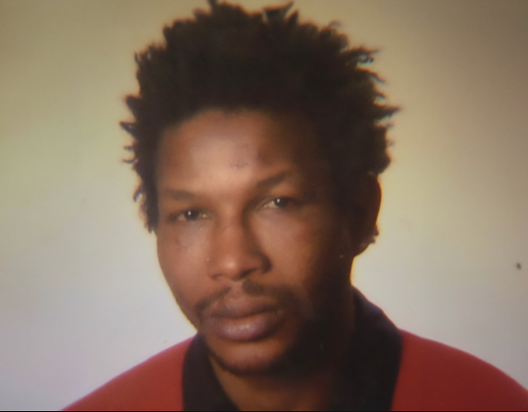
Ahmed Sbai, 08.11.2010. Jailed – Salé

Categories
Victims

Oury Jalloh, 07.01.2005. Died in a fire tied to the mattress alone in his cell – Dessau

January 5, 2005, police station – Dessau (Saxony-Anhalt)
36 year-old. Hands and feet tied to his mattress in his cell when fire broke out: deceased

Oury Jalloh, originally from Sierra Leone, was arrested on 7 January 2005 by police in Dessau, Saxony-Anhalt, for alleged public disturbances. He was taken into custody and placed in Cell No. 5 of the police station, where he was handcuffed and restrained on a fireproof mattress. Hours later, firefighters responding to an emergency call discovered his body burnt beyond recognition.

The police version

The official narrative provided by authorities claimed that Jalloh had somehow set himself on fire with a lighter, despite being bound and under constant surveillance. This explanation has been fiercely contested, with critics pointing to inconsistent evidence, overlooked forensic findings and conflicting witness statements.

In the morning of 7 January 2005, at about 08:00 am, some street cleaners called the police and reported that a female colleague felt threatened by a drunk man (who was Oury Jalloh). When two policemen (Hans-Ulrich M. and Udo S.) arrived, Jalloh declined to show his identification and then resisted arrest. The officers put him in a headlock and took him into custody, intending to book him for harassment although charges were never made.

At the police station, the two policemen took Jalloh to the basement and held him whilst a doctor took his blood to test for alcohol and drugs. The test showed a BAC of about 3‰ and indicated usage of cocaine. The doctor assessed Jalloh as safe to be locked up. Jalloh was taken to a cell and held until he could be seen by a judge. Two officers dragged him to a cell and handcuffed him to a bed by his hands and feet.

Policewoman Beate H. was working in the second floor control room, together with Andreas S., her superior. On the intercom she heard Jalloh rattling his chains and swearing, so she attempted to calm him and she reports later she heard other officers in the cell. She went to check on him herself at about 11:30 am, without noting anything unusual. She returned to the control room, where Andreas S. turned down the intercom volume and she told him to turn it back up. At around noon she claimed she heard splashing sounds and told Andreas S. it was his turn to check. She originally said that after the fire alarm went off, Andreas S. turned it off twice. When another different alarm went off, he went to check what was going on. Gerhard M. followed Andreas S. downstairs to the cells, where they found Jalloh alive but burning to death. His final word was “Fire“.

The police suggested that Jalloh had burnt himself to death, using a lighter to ignite the foam mattress he was lying on in the cell. One appeared in an evidence bag several days after Jalloh‘s death.

The Justice version

The official autopsy concluded that the immediate cause of death was likely heat shock to Jalloh‘s lungs by smoke inhalation. A later 2019 autopsy conducted by experts from Goethe University after being commissioned by Jalloh‘s family, found that he had a broken rib, a broken nose and a fracture at the base of his skull, indicating that Oury Jalloh may have been tortured before his death. The original autopsy had listed only a recent nose fracture. The doctors were convinced that the injuries had occurred before death.

In March 2007, a trial was opened at the state court of Dessau against police officers Hans-Ulrich M. and his superior, Andreas S. The two officers were charged for causing bodily harm with fatal consequences, and for involuntary manslaughter, respectively. On 8 December 2008 the court acquitted both defendants of all charges. According to Manfred Steinhoff, the presiding judge, contradictory testimony had prevented clarification of the circumstances and had obstructed due process. In his closing speech Steinhoff accused the police officers of lying in court and thus damaging the reputation of the state of Saxony-Anhalt. The trial had thrown up inconsistencies and gaps in the narrative of the police officers and had lasted 60 days instead of the scheduled four. Fire experts had been unable to recreate the means of death. The issue of how the lighter that had allegedly been used to start the fire got into the cell was unexplained. Beate H. changed her initial report to say that Andreas S. had not turned down the fire alarm twice but rather got up and went downstairs, but she was unable to say exactly when because she worked with her back facing the door. The family and supporters of Jalloh were outraged by the verdict. The family had been offered €5,000 by the court since it could not establish the guilt of the officers, but Jalloh‘s father said he did not want the money.

On 7 January 2010, exactly five years after Jalloh died in his cell, the Bundesgerichtshof federal court in Karlsruhe overturned the earlier verdict. The case was relegated to the state court of Saxony-Anhalt at Magdeburg for retrial. During the investigations the deaths of Hans-Jürgen Rose (died from internal injuries hours after being released from the same police building in 1997) and Mario Bichtemann (died from an unsupervised skull fracture in the same cell in 2002) were re-examined. In 2012, Andreas S. was found guilty of involuntary manslaughter and fined €10,800. A new trial then began in 2014 and ended without any convictions in 2017.

In August 2020 the Landtag of Saxony-Anhalt published a report by special investigators Jerzy Montag and Manfred Nötzel on the Jalloh case, calling the policemen’s actions “flawed” and “contrary to the law“. However, they concluded that the district attorney’s final dismissal of the case in 2017 was “factually and legally correct in view of available evidence“.

Physical violence
 Kicks, punches, slaps
 Feet / knees on the nape of the neck, chest or face
 Blows to the victim while under control and/or on the ground
 Blows to the ears
XStrangulation / chokehold
 Painful armlock
 Fingers forced backwards
 Spraying with water
 Dog bites
 Hair pulling
 Painfully pulling by colson ties or handcuffs
 Use of gloves
 Use of firearm
 Use of “Bean bags” (a coton sack containing tiny lead bullets)
 Use of FlashBall weapon
 Use of sound grenade
 Use of dispersal grenade
 Use of teargas grenade
 Use of rubber bullets weapon (LBD40 type)
 Use of batons
 Use of Pepper Spray
 Use of Taser gun
Psychological violence
 Charge of disturbing public order
 Charge of rebellion
 Accusation of beatings to officer
 Charge of threatening officer
 Charge of insulting an officer
 Threat with a weapon
 Aggressive behaviour, disrespect, insults
 Calls to end torment remained unheeded
 Sexist remarks
 Homophobic remarks
 Racist comments
 Violence by fellow police officers
 Passivity of police colleagues
 Lack or refusal of the police officer to identify him or herself
 Vexing or intimidating identity check
 Intimidation or arrest of witnesses
 Prevented from taking photographs or from filming the scene
 Refusal to notify someone or to telephone
 Refusal to administer a breathalyzer
 Refusal to fasten the seatbelt during transport
 Refusal to file a complaint
 Refusal to allow medical care or medication
XLies, cover-ups, disappearance of evidence
 Undress before witnesses of the opposite sex
 Bend down naked in front of witnesses
XLack of surveillance or monitoring during detention
 Lack of signature in the Personal Effects Register during detention
 Confiscation, deterioration, destruction of personal effects
 Pressure to sign documents
 Absence of a report
 Deprivation during detention (water, food)
 Inappropriate sanitary conditions during detention (temperature, hygiene, light)
 Complacency of doctors
 Kettling (corraling protestors to isolate them from the rest of the demonstration)
 Prolonged uncomfortable position
  • 00.08.2020 – Report by special investigators Jerzy Montag and Manfred Nötzel calls the policemen’s actions “flawed” and “contrary to the law” but district attorney’s final dismissal of the case in 2017 “factually and legally correct in view of available evidence
  • 00.00.2019 – Second experts report commissioned by Jalloh‘s family
  • 00.00.2014 – New trial : no conviction
  • 00.00.2012Andreas S. found guilty of involuntary manslaughter and fined €10,800
  • 07.01.2010 – Bundesgerichtshof federal court in Karlsruhe overturns the earlier verdict; case relegated to the state court of Saxony-Anhalt at Magdeburg for retrial
  • 08.12.2008 – Court acquits d both defendants of all charges
  • 00.03.2007 – Trial at the state court of Dessau against police officers Hans-Ulrich M. and his superior, Andreas S.,charged for causing bodily harm with fatal consequences, and for involuntary manslaughter, respectively.
  • 07.01.2005 – Arrest and death of Oury Jalloh
  • Lawyer :
  • Collective :
  • Donations :
Categories
Victims

Bobby Sands, 1981.05.05. Died on hunger strike in prison – Maze

May 5, 1981 – HM Prison Maze, Northern Ireland
27 year-old. Starved in a hunger strike : deceased

Robert Gerard Sands (Roibeárd Gearóid Ó Seachnasaigh),  9 March 1954 – 5 May 1981 was a member of the Provisional Irish Republican Army (IRA) who died on hunger strike while imprisoned at HM Prison Maze in Northern Ireland. Sands helped to plan the 1976 Balmoral Furniture Company bombing in Dunmurry, which was followed by a gun battle with the Royal Ulster Constabulary. He was arrested while trying to escape and sentenced to 14 years for firearms possession.

He was the leader of the 1981 hunger strike in which Irish republican prisoners protested against the removal of Special Category Status. During Sands‘ strike, he was elected to the UK Parliament as an Anti H-Block candidate. His death and those of nine other hunger strikers was followed by a surge of IRA recruitment and activity. International media coverage brought attention to the hunger strikers, and the republican movement in general, attracting both praise and criticism.

Sands was arrested and charged in October 1972 with possession of four handguns found in the house where he was staying. He was convicted in April 1973, sentenced to five years imprisonment, and released in April 1976.

Upon his release, he returned to his family home in West Belfast, and resumed his active role in the Provisional IRA. Sands and Joe McDonnell planned the bombing of the Balmoral Furniture Company in Dunmurry on 14 October 1976. The showroom was destroyed but as the IRA men left the scene there was a gun battle with the Royal Ulster Constabulary. Leaving behind two wounded, Seamus Martin and Gabriel Corbett, the remaining four (Sands, McDonnell, Seamus Finucane, and Sean Lavery) tried to escape by car, but were arrested. One of the revolvers used in the attack was found in the car. On 7 September 1977, the four men were sentenced to 14 years for possession of the revolver. They were not charged with explosive offences.

Immediately after his sentencing, Sands was implicated in a fight and sent to the punishment block in Crumlin Road Prison. The cells contained a bed, a mattress, a chamber pot and a water container. Books, radios and other personal items were not permitted, although a Bible and some Catholic pamphlets were provided. Sands refused to wear a prison uniform, so was kept naked in his cell for twenty-two days without access to bedding from 7.30 am to 8.30 pm each day.

In late 1980, Sands was chosen Officer Commanding of the Provisional IRA prisoners in the Maze Prison, succeeding Brendan Hughes, who was participating in the first hunger strike. Republican prisoners organised a series of protests seeking to regain their previous Special Category Status, which would free them from some ordinary prison regulations. This began with the “blanket protest” in 1976, in which the prisoners refused to wear prison uniforms and wore blankets instead. In 1978, after a number of attacks on prisoners leaving their cells to “slop out” (i.e., empty their chamber pots), this escalated into the “dirty protest“, wherein prisoners refused to wash and smeared the walls of their cells with excrement. Sands wrote about the brutality of Maze prison guards:

“The screws [prison guards] removed me from my cell naked and I was conveyed to the punishment block in a blacked out van. As I stepped out of the van on arrival there they grabbed me from all sides and began punching and kicking me to the ground … they dragged me by the hair across a stretch of hard core rubble to the gate of the punishment block. The full weight of my body recoiled forward again, smashing my head against the corrugated iron covering around the gate.”

The 1981 Irish hunger strike started with Sands refusing food on 1 March 1981. He decided that other prisoners should join the strike at staggered intervals to maximise publicity, with prisoners steadily deteriorating successively over several months. The hunger strike centred on five demands:

  • the right not to wear a prison uniform;
  • the right not to do prison work;
  • the right of free association with other prisoners, and to organise educational and recreational pursuits;
  • the right to one visit, one letter, and one parcel per week;
  • full restoration of remission lost through the protest.

The significance of the hunger strike was the prisoners’ aim of being considered political prisoners as opposed to criminals. Shortly before Sands‘s death, The Washington Post reported that the primary aim of the hunger strike was to generate international publicity.

Sands died on 5 May 1981 in the Maze’s prison hospital after 66 days on hunger strike, aged 27. The original pathologist’s report recorded the hunger strikers’ causes of death as “self-imposed starvation“, amended to simply “starvation” following protests by the dead strikers’ families. The coroner recorded verdicts of “starvation, self-imposed“. Sands was one of 22 Irish republicans (in the 20th century) who died on hunger-strike.

Sands became a martyr to Irish republicans, and the announcement of his death prompted several days of rioting in nationalist areas of Northern Ireland. More than 100,000 people lined the route of Sands‘s funeral from St. Luke’s Catholic Church in Twinbrook, and he was buried in the ‘New Republican Plot’ alongside 76 others.

Physical violence
X
Kicks, punches, slaps
 Feet / knees on the nape of the neck, chest or face
XBlows to the victim while under control and/or on the ground
 Blows to the ears
 Strangulation / chokehold
 Painful armlock
 Fingers forced backwards
 Spraying with water
 Dog bites
XHair pulling
 Painfully pulling by colson ties or handcuffs
 Use of gloves
 Use of firearm
 Use of “Bean bags” (a coton sack containing tiny lead bullets)
 Use of FlashBall weapon
 Use of sound grenade
 Use of dispersal grenade
 Use of teargas grenade
 Use of rubber bullets weapon (LBD40 type)
 Use of batons
 Use of Pepper Spray
 Use of Taser gun
Psychological violence
 Charge of disturbing public order
 Charge of rebellion
 Accusation of beatings to officer
 Charge of threatening officer
 Charge of insulting an officer
 Threat with a weapon
 Aggressive behaviour, disrespect, insults
 Calls to end torment remained unheeded
 Sexist remarks
 Homophobic remarks
 Racist comments
 Violence by fellow police officers
 Passivity of police colleagues
 Lack or refusal of the police officer to identify him or herself
 Vexing or intimidating identity check
 Intimidation or arrest of witnesses
 Prevented from taking photographs or from filming the scene
 Refusal to notify someone or to telephone
 Refusal to administer a breathalyzer
 Refusal to fasten the seatbelt during transport
 Refusal to file a complaint
 Refusal to allow medical care or medication
 Lies, cover-ups, disappearance of evidence
 Undress before witnesses of the opposite sex
 Bend down naked in front of witnesses
 Lack of surveillance or monitoring during detention
 Lack of signature in the Personal Effects Register during detention
 Confiscation, deterioration, destruction of personal effects
 Pressure to sign documents
 Absence of a report
XDeprivation during detention (water, food)
XInappropriate sanitary conditions during detention (temperature, hygiene, light)
 Complacency of doctors
 Kettling (corraling protestors to isolate them from the rest of the demonstration)
 Prolonged uncomfortable position
  • 05.05.1981 – Death of Bobby Sands
  • 01.03.1981Sands starts refusing food
  • 00.00.1978 – Dirty protest
  • 00.09.1977 – Sent to the punishment block in Crumlin Road Prison
  • 07.09.1977 – Sentenced to 14 years for possession of the revolver found in their car, not charged with explosive offences
  • 00.00.1978 – Blanket protest
  • 14.10.1976 – Bombing of the Balmoral Furniture Company in Dunmurry; Sands arrested, along with McDonnell, Seamus Finucane, and Sean Lavery
  • 00.04.1976 – Released
  • 00.04.1973 – Sentenced to five years imprisonment
  • 00.10.1972 – Arrested and charged with possession of four handguns
  • Lawyer :
  • Collective :
  • Donations :
Categories
Victims

Franco Serantini, 05.05.1972. Died from cerebral hemorrhage in prison – Pisa

May 5, 1972. In prison – Pisa
21-year old. Beaten up during his arrest, remained untreated : died from cerebral hemorrhage

Franco Serantini was born in Cagliari in 1951 and was abandoned at birth at the city’s children’s home. When he was two years old he was entrusted to a Sicilian couple, but soon after his adoptive mother fell ill with cancer and died; the widower, left alone, was not allowed to finalize the adoption paperwork. When Franco was nine years old, he returned to the brefotrophy in Cagliari, where he remained until 1968, when the management of the institution informed the juvenile court that it was unable to follow the boy, who was not applying himself to his studies. The judge felt that the best solution to solve Franco‘s adolescent crisis was to lock him up in a reformatory, and so the boy was sent to the Men’s Re-education Institute in Pisa, “under a regime of semi-freedom,” meaning he had to eat and sleep in the institution.

In Pisa, however, Franco discovered political commitment, which, while on the one hand allowed him not to fall into the trap of common delinquency (which happens all too often in situations like his), on the other hand marked his death sentence. He was active in solidarity movements that organized low-cost markets, approached the anarchist movement, but also frequented the political milieu of Luciano Della Mea, a libertarian Marxist who represented for him the family he never had.

It is to Serantini‘s research that we owe the discovery of the well-known proclamation signed by Giorgio Almirante when he was chief of staff of the PS Office in Paganico (GR), in which he communicated

Pisa after 1968 was a city rich in political life. The “Pisan Workers’ Power” group (not to be confused with the Workers’ Power of Piperno, Negri and Scalzone) was founded in Pisa, which later gave birth to Lotta Continua, led (among others) by Luciano Della Mea and Adriano Sofri. In Pisa in those years the leaders of the communist youth were Massimo D’Alema and Fabio Mussi. Enrolled at the University of Pisa were many Greek anti-fascist students who were in exile because of the dictatorship of the colonels. Pisa was the scene of numerous clashes between fascists and police, between fascists and antifascists, and between antifascists and police, and it was at an antifascist demonstration that Franco Serantini, who had meanwhile become a militant anarchist, was beaten to death by police.

On May 5, the closing day of the election campaign, a rally was planned by the Missino deputy Giuseppe Niccolai, against whom Lotta Continua and the anarchists had called a protest demonstration.

Mayor Lazzari, taking into account the small size of the square and its location in the middle of narrow, winding streets, and fearing incidents (as had happened in previous days in other cities in Tuscany) asked the authorities together with the council and representatives of some parties (PCI, PSI and PSIUP) to move the rally to a less central area, but to no avail. On the other hand, 800 men of the I celere grouping, 500 carabinieri and 100 carabinieri paratroopers were rushed to the city to support the city’s PS units.

The Missino deputy speaks in a square surrounded by shields, helmets, visor helmets, tromboncini with tear gas in the barrel, machine guns aimed. The fascists numbered perhaps two hundred, they shouted “Italy, Italy,” the deputy spoke for an hour and a half, a woman, Morena Morelli, came all the way under the stage, mocked the speaker, called him a fascist and was arrested.

Around 6:30 p.m. police charges against the protesters began, and the historic center of Pisa experienced more than three hours of urban guerrilla warfare. The police threw tear gas not only on the protesters, but also inside the doorways of houses and even against the city hall.

Mayor Lazzari looks out a window of the Gambacorti Palace and shouts at the policemen to stop targeting the municipality. “I said I was the mayor, that a council meeting was in progress (…) no one from above was threatening the police. They were pointing their guns up, firing one stick after another, giving the impression that they were drugged. It’s not as if they were listening to my words, they kept throwing sticks at the mullioned windows.’

Dozens were beaten and battered protesters; some, hit by tear gas, had to be hospitalized. Some witnesses claimed to have seen police officers firing guns at eye level among the protesters.

Franco Serantini was on the Lungarno Gambacorti, but inexplicably, instead of fleeing into the alleys, he lingered in the street. Thus recounted a resident of the Lungarno, Moreno Papini.

… I saw that they were grabbing one (…) about fifteen celerini jumped on him and started beating him with incredible fury. They had circled over him so that he could no longer be seen, but you could tell from the gestures of the celerini that they had to hit him both with their hands and feet and with the kicks of their rifles. All of a sudden some of the celerini got out of the trucks there in front and intervened (…) “Enough, you’re going to kill him!” (…) one who looked like a graduate entered the middle and with another celerino they pulled him up. Only at that moment I could see his face, because he was holding his head dangling on his back….

Franco was arrested and taken to the PS barracks. All those who saw him in the large room where the arrestees were put testified that it was clearly seen that he was very sick: he was unable to hold his head up, he could not speak, he had a yellowish color in his face. Nevertheless, no one thought of having him admitted to the hospital, or even of having him seen by a doctor; they took him to the jail, where he was interrogated by the magistrate on duty, who claimed to have asked for a medical examination for him, a detail that the public defender said he did not remember. Franco was examined only four hours after the interrogation, but the doctor merely prescribed an ice pack, did not measure his blood pressure, and did not have any X-rays taken. Taken back to his cell, his comrades became concerned as they saw him deteriorate but throughout the night on Saturday no one took any action. Only on Sunday morning was Franco taken to the prison emergency room, but by then it was too late: his heart stopped beating at 9:45 a.m. and the prison doctor wrote in the certificate “cerebral hemorrhage.”

The news of his death spread, and only because of the mobilization of friends and the stubbornness of the registrar’s clerk, who refused to sign the authorization to transport the body, because, since it was a violent death, authorization from the Public Prosecutor’s Office was necessary, Franco Serantini‘s murder would not be covered up. It is Luciano Della Mea who is the first to take action and contacts lawyer Bianca Guidetti Serra to make a complaint. The lawyer tracks down an old law of popular action “which allows any citizen to constitute himself as a civil party in protection of a person assisted by a charitable institution who is without parents or relatives” (remember that for the laws of the time Franco was a minor at the time of his death, having not yet turned 21). This will allow the investigation to begin.

he outcome of the necropsy examination is a frightening report. Thus stated lawyer Sorbi, who had attended the examination.

It was a trauma to watch the autopsy, to see that boy I knew being dissected. A butchered body, chest, shoulders, head, arms. There was not even a small surface untouched. I had a long night of nightmares.

But in the end the investigation will not lead to the punishment of any perpetrator. The policemen responsible for Franco‘s death could not be identified (they had helmets); none of those who did not have the boy examined would be prosecuted.

In May 1972 Commissioner Giuseppe Pironomonte, who tried, by arresting him, to remove Serantini from the fury of the officers, resigned from the police force. (…) after the death of the young anarchist, he undergoes a profound crisis, realizes that that of the policeman, as it is done in Italy, is not the job for him, realizes that it is difficult to try to change the system from within, and abandons the PS.

Finally, a brief mention of the figure of the then quaestor of Pisa, Dr. Mariano Perris: he had previously served as an executive of the political squad in Milan and Turin, and his name was found, during a search in the offices of FIAT on 5/8/71, ordered by Praetor Guariniello, among those of the PS executives who allegedly collected bribes from FIAT for controlling the political activity of the company’s employees (on this see the publication edited by Lotta Continua in 1972, Agnelli is afraid and pays off the police headquarters).

After Pisa, Perris was appointed quaestor in Milan; but we must remember that during the period of the Germanic occupation of Trieste he had been one of the leaders (he was in charge of the “judicial squad”) of the Special Inspectorate of PS, better known in the city as the “Collotti gang,” a collaborationist body that distinguished itself by the ferocity with which its members conducted anti-partisan repression. Perris’s squad was in charge of arresting common criminals to be blackmailed or intimidated (during the trial of the “gang,” a witness asserted that the torture apparatus with electricity “also passed through Perris’s office”) in order to infiltrate them into the partisan movement or to be used directly in roundup operations.

Perris avoided being tried for collaborationism along with the other corps leaders by availing himself of an affidavit provided by the Triestine CLN (of nationalist and anti-communist persuasion): a witness asserted that his team did not deal with political issues (and its role was not investigated in depth), so that the commissioner continued his career in the PS of the “republic born of the Resistance,” with the resume we have seen.

Fact sheet edited by Claudia Cernigoi from La Bottega del Barbieri

Translated with DeepL.com (free version)


Physical violence
X
Kicks, punches, slaps
 Feet / knees on the nape of the neck, chest or face
XBlows to the victim while under control and/or on the ground
 Blows to the ears
 Strangulation / chokehold
 Painful armlock
 Fingers forced backwards
 Spraying with water
 Dog bites
 Hair pulling
 Painfully pulling by colson ties or handcuffs
 Use of gloves
 Use of firearm
 Use of “Bean bags” (a coton sack containing tiny lead bullets)
 Use of FlashBall weapon
 Use of sound grenade
 Use of dispersal grenade
XUse of teargas grenade
 Use of rubber bullets weapon (LBD40 type)
 Use of batons
 Use of Pepper Spray
 Use of Taser gun
Psychological violence
 Charge of disturbing public order
 Charge of rebellion
 Accusation of beatings to officer
 Charge of threatening officer
 Charge of insulting an officer
 Threat with a weapon
XAggressive behaviour, disrespect, insults
 Calls to end torment remained unheeded
 Sexist remarks
 Homophobic remarks
 Racist comments
 Violence by fellow police officers
 Passivity of police colleagues
 Lack or refusal of the police officer to identify him or herself
 Vexing or intimidating identity check
 Intimidation or arrest of witnesses
 Prevented from taking photographs or from filming the scene
 Refusal to notify someone or to telephone
 Refusal to administer a breathalyzer
 Refusal to fasten the seatbelt during transport
 Refusal to file a complaint
XRefusal to allow medical care or medication
 Lies, cover-ups, disappearance of evidence
 Undress before witnesses of the opposite sex
 Bend down naked in front of witnesses
 Lack of surveillance or monitoring during detention
 Lack of signature in the Personal Effects Register during detention
 Confiscation, deterioration, destruction of personal effects
 Pressure to sign documents
 Absence of a report
 Deprivation during detention (water, food)
 Inappropriate sanitary conditions during detention (temperature, hygiene, light)
 Complacency of doctors
 Kettling (corraling protestors to isolate them from the rest of the demonstration)
 Prolonged uncomfortable position

No conviction, no prosecution, no trial

  • Lawyer :
  • Collective :
  • Donations :